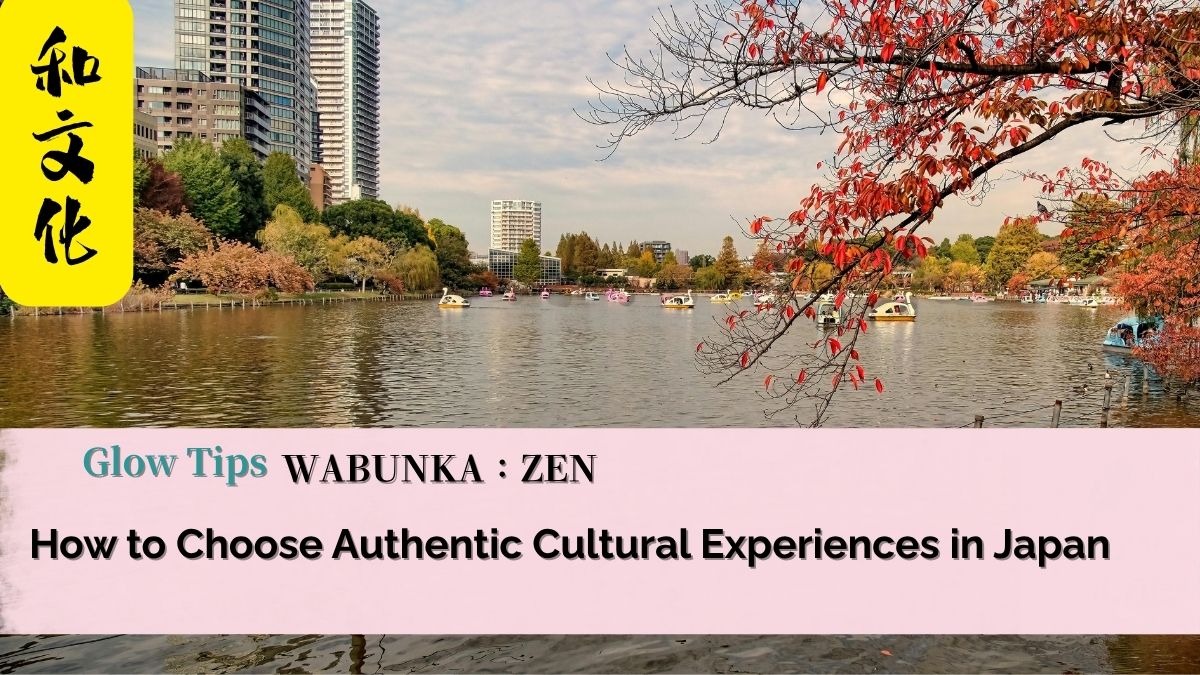
A realistic guide to choosing tea ceremonies, meditation sessions,
and traditional workshops — without the marketing fluff.
- Why Every Cultural Experience in Japan Sounds Exactly the Same
- ⚡ Quick Verdict: Which Type of Experience Is Right for You
- 5 Things That Actually Matter When Choosing a Cultural Experience in Japan
- Why Some Experiences Cost 0 — And Whether That’s Worth It
- The Decision Framework: Which Experience Matches Your Trip
- Where to Actually Book Vetted Cultural Experiences in Japan
- Real Talk: What Actually Happens During These Experiences
- ❓ Common Questions About Japanese Cultural Experiences
- How to Book Without Stress: Practical Notes From Someone Who Overthought This
- What to Remember Before You Book
- Disclosure
- 📎 References
- Related Reading
- About the Author
Why Every Cultural Experience in Japan Sounds Exactly the Same
There’s a moment that happens to most people planning a trip to Japan. You decide you want to do something real — not just temples and convenience stores, but an actual tea ceremony, or zazen meditation, or a kintsugi workshop. Something you’ll remember.
So you open Google. And immediately, everything looks identical.
“Authentic traditional experience.” “Led by expert instructor.” “Highly rated!” Every listing. Every platform. The same words, in the same order, with the same five-star reviews that say “amazing!” and nothing else.
My friend Emma asked me which tea ceremony was “the real one.” I thought I’d find the answer in ten minutes. I’m based in Tokyo, I speak Japanese, I know this city. Ten minutes turned into three hours, 47 browser tabs, and a spreadsheet I’m still slightly embarrassed about.
What I realized — and what nobody tells you upfront — is that the confusion is structural. The cultural experience market has a marketing problem. Everyone uses the same language because it works. But it’s become meaningless. “Authentic” now means nothing, because everything claims it.
So I stopped reading the marketing copy and started looking at what actually separates a meaningful experience from a well-produced tourist performance. After comparing 50+ experiences across Tokyo, Kyoto, and Osaka — tea ceremonies, zazen sessions, kintsugi workshops, sake tours, traditional crafts — here’s what I found.
⚡ Quick Verdict: Which Type of Experience Is Right for You
A budget-tier experience ($40–130) is right if:
- It’s your first trip to Japan and you want to sample many things
- You’re on a tight budget and want the “I tried it” experience
- You’re happy with a group setting and a general introduction
A mid-tier experience ($130–320) is right if:
- You actually want to learn — not just observe
- You want time for questions, hands-on practice, and real conversation
- Cultural experience is one of your main reasons for visiting Japan
A premium experience ($320+) is right if:
- Cultural immersion is the main point of your trip
- You want private instruction from a master-level practitioner
- You’re celebrating something significant and want it to be unforgettable
Skip and look elsewhere if:
- Your total daily budget is under $100 — most vetted private experiences won’t fit comfortably
- You prefer spontaneous, last-minute bookings — quality experiences book in advance
- You’re happy navigating Japanese booking systems yourself
5 Things That Actually Matter When Choosing a Cultural Experience in Japan
After comparing 50+ experiences, patterns emerged. Not marketing patterns — real ones. The experiences people remembered months later had five things in common.
1. Who’s Actually Teaching You (Not Their Job Title)
“Tea ceremony instructor” could mean a master who has practiced for 30 years, or someone trained for 6 months to teach tourists. Both are technically instructors. Very different experiences.
A $60 tea ceremony taught by “professional staff” and a $400 tea ceremony taught by a licensed master from the Urasenke school (practiced since 1547) both got good reviews. But the $60 reviews said “nice experience.” The $400 reviews said “life-changing.” That word choice matters.
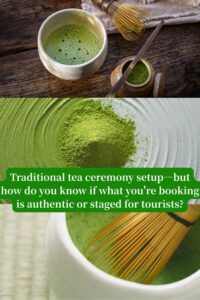
How to check: look for specific credentials rather than vague titles. Check how many years they’ve practiced — 20+ is master-level. See if they mention which school or tradition they belong to. Search for phrases like “licensed master,” “certified by [school name],” “trained under [master’s name].” Vague language like “cultural expert” or “professional guide” often means tourist-focused rather than practitioner-led.
2. How Many People Are There
Some uncomfortable math. Large group experience: 15 people, $80 each, 60 minutes. That’s 4 minutes of potential individual attention per person. Private experience: 2 people, $300 each, 90 minutes. That’s 90 minutes of undivided attention. The “expensive” private option is often more cost-effective per minute of actual learning.
Beyond the math, group size affects everything: whether you can ask questions without holding everyone up, whether the instructor can correct your technique individually, whether the pace suits you or the group average. My friend Priya did a 12-person tea ceremony and said: “It was beautiful to watch, but I couldn’t ask questions. I forgot most of it by the next day.” My friend Emma did a private session and came back able to explain wabi-sabi, ichi-go ichi-e, and why asymmetry in ceramics is intentional, not a flaw.
3. How Long the Experience Actually Is
Here’s what actually happens in a 60-minute experience: ten minutes for arrival and settling in, ten minutes of background explanation, thirty minutes of demonstration and your attempt, ten minutes of wrap-up and photos. You paid for thirty minutes of actual learning.
A 90–120 minute experience has time for questions, for trying and failing, for understanding why each movement matters rather than just copying it. My friend who did the 60-minute version forgot everything by dinner. My friend who did 120 minutes was still thinking about it three months later.
4. Whether You Can Actually Understand What’s Happening
Without English explanation, the ceremony is beautiful and the meaning is invisible. Why did she turn the bowl three times? No idea. What’s the philosophy behind that specific movement? Mystery. You get nice photos, though.
Versus understanding concepts like ichi-go ichi-e — this moment will never happen again exactly this way, so be fully present — and wabi-sabi, finding beauty in imperfection and impermanence. Same activity. Completely different depth.
Three levels of English support to look for: visual only (follow by watching, no explanation — fine for experienced practitioners who already understand the philosophy); interpreter provided (Japanese instructor with English translator — works for most international travelers); English-speaking instructor (direct conversation, cultural concepts explained naturally — best for anyone who wants to actually understand, not just participate).
5. Where You’re Actually Doing This
Two kintsugi workshops. Workshop A: modern studio in a Shibuya office building, clean, new tatami mats, organized supplies. Workshop B: artisan’s actual workspace in a 100-year-old wooden townhouse, tools showing decades of use, smell of lacquer in the air, the master’s finished pieces everywhere. Both teach the same technique. At Workshop B, you feel the history. The environment teaches things the instructor doesn’t have to say.
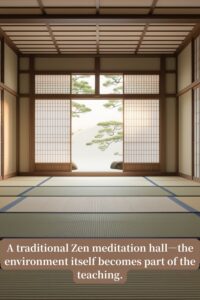
For zazen especially, this matters. Sitting in a hotel room with temporary tatami mats is a different experience from sitting in a temple where monks have meditated for centuries. The space itself is part of the teaching.
3 Things That Don’t Matter As Much As You Think
Traditional clothing photo opportunities are a fun add-on, not an indicator of authenticity. A certificate of completion is a souvenir, not a credential. Instagram-worthy settings look good in photos but photogenic doesn’t equal meaningful — some of the most significant experiences happen in simple, undecorated spaces where the practice itself is the whole point.
🌸 Ready to find your experience?
Browse vetted tea ceremony, zazen, kintsugi, and traditional craft experiences — filtered by city, group size, and price.

Filter by city · experience type · duration · price
Why Some Experiences Cost 0 — And Whether That’s Worth It
Some cultural experiences cost as much as a flight from Singapore to Tokyo. Is that reasonable? Consider what else costs $300–400 for two hours: a Michelin star dinner runs $200–500, a private museum tour with a curator $250–400, a ski lesson with an Olympic coach $400–600. You’re paying for decades of expertise, not just two hours of time.
But here’s what nobody says clearly: you don’t need the most expensive option. You need the option that matches what you actually want from the experience. Those are different questions.
Budget Tier: –130
Group setting of 10–15 people, basic introduction to the practice, 45–60 minutes, the experience of having tried it. My friend Lisa did a $65 tea ceremony in Kyoto on her first trip to Japan: “It was a lovely introduction. I learned the basic steps, tried the matcha, took beautiful photos. Do I deeply understand tea ceremony now? No. But I have a nice memory and I know I want to learn more next time.” That’s a completely valid outcome — she knew what she was getting.
Mid-Tier: 0–320
Small group of 4–8 people, 90–120 minutes, English-speaking instructor or interpreter, hands-on practice with individual feedback, time for real questions. This is where most people who want a meaningful experience should be looking. My friend Marcus booked a $240 zazen and tea ceremony experience in Kyoto for his 10th wedding anniversary — small group of six, a monk who explained Zen philosophy in detail, 40 minutes of meditation, then a private tea ceremony. “It wasn’t cheap, but it was the highlight of our trip. We still talk about what we learned.”
Premium Tier: 0–1,300+
Private or 2–4 people maximum, master-level instructor with 20–40+ years of practice, two to three hours, sometimes access to spaces not open to the public. My friend Priya spent the premium-tier equivalent on a private kintsugi workshop in Kyoto — three hours, just her and the master artisan. “He showed me techniques he said he doesn’t usually teach tourists. We talked about wabi-sabi, about accepting imperfection in life, not just pottery. I repaired a bowl my grandmother had given me. It wasn’t just an experience — it changed how I think about repair and beauty.”
Which Tier Should You Choose?
Budget if you want to sample without major investment, it’s your first visit, or you’re genuinely on a tight budget. Mid-tier if you want to actually learn and understand rather than just observe, and are willing to prioritize two or three cultural experiences over other activities. Premium if cultural immersion is your main reason for visiting Japan, or you’re celebrating something significant and one deep experience matters more than several surface ones.
There’s no wrong choice. There’s only the choice that matches what you actually want.
The Decision Framework: Which Experience Matches Your Trip
Three honest questions to answer before you book.
First: what’s your daily travel budget? Under $130 per day, stick to budget tier — maybe one mid-tier experience as a highlight. At $130–260 per day, mid-tier is comfortable and you can fit two or three quality experiences into a week-long trip without stress. At $260–400 per day, mid-tier is easy and premium is accessible — choose based on genuine interest, not budget pressure. Above $400 per day, premium experiences are within range; choose based on what matters most to you.
Second: how important is this experience to your trip? If you’re curious to try it, budget is fine. If this is one of your main reasons for visiting Japan, mid-tier is the minimum. If this is the reason for the trip, go premium — you’ll regret not going all-in.
Third: how much time do you have in Japan? Three to five days means one or two cultural experiences maximum — don’t overload. Six to ten days allows three or four, mixing budget and mid-tier or focusing on two or three mid-tier. Ten or more days gives room for both breadth and depth, including one or two premium experiences.
If you’re agonizing over which tea ceremony to book, you probably want mid-tier. If you know exactly why you want private instruction from a master, book premium. If you just want to try it, budget is fine. Trust your instinct — it’s probably right.
Where to Actually Book Vetted Cultural Experiences in Japan
After the 47-tab research spiral, I found Wabunka. Full disclosure: it’s not the only way to book cultural experiences in Japan. You can absolutely do this yourself — it just takes time, and it helps to read Japanese.
But if you’d rather not spend your pre-trip evenings comparing tea ceremony listings and running temple websites through Google Translate at midnight, here’s what made it different from the rest of what I found.
What Works About It
Everything is already vetted. All experiences are led by actual practitioners — tea masters with decades of practice, Zen monks from active temples, traditional craftspeople from generational families. Not actors playing roles for tourists. I didn’t have to spend hours verifying whether the instructor was actually qualified.
Group sizes are stated clearly on every listing. “Private (1–4 people)” or “Small group (up to 6)” — no surprises when you show up. Pricing is transparent: what you see is what you pay, with no hidden fees for English support, materials, or private booking surcharges. During my DIY research, I found experiences that advertised one price and added fees at checkout. Wabunka shows the total upfront.
English support is confirmed per listing, not assumed. And booking takes minutes rather than days of email back-and-forth in a language you may not speak.
Some Specific Examples
Tea Ceremony in Kyoto: 100 minutes in an authentic tearoom with a licensed tea master, seasonal light meal included, private or up to 4 people. Expensive — but you’re getting a master’s expertise, an authentic venue, and undivided attention. Worth it if tea ceremony genuinely matters to you.
Zazen Meditation in Tokyo (Asakusa): 110 minutes at a historic temple with an actual Zen monk, matcha and traditional sweets included, private session. Compare this to free public zazen sessions that offer no English support, no explanation, and no personal guidance. The premium here is understanding and personalization.
Kintsugi Workshop in Kyoto: 120 minutes in a traditional lacquer studio with a professional artisan, option to bring your own piece to repair or use provided ceramics, English-speaking instructor. Authentic traditional kintsugi using real lacquer — not the modern hobby shortcuts. You’re learning from someone who does this professionally.
Bonsai Creation at Shunkaen Museum (Tokyo): 100 minutes with Master Kunio Kobayashi’s team — world-renowned, multiple Prime Minister awards — create your own bonsai to take home, tea ceremony included. Master Kobayashi is to bonsai what a Michelin 3-star chef is to cooking. The price reflects access to that level of expertise.
When Wabunka Makes Sense — and When It Doesn’t
It’s a good fit if you value verified quality over bargain hunting, need reliable English support confirmed before you arrive, prefer private or small group learning, and want to book online without an email marathon. It’s designed for mid-tier and premium experiences — if your budget is under $150 per experience, you’ll find better options elsewhere.
Look elsewhere if you want to sample many cheap activities, prefer large group tours, or like booking things spontaneously. For budget-level experiences, Viator and GetYourGuide have more options at lower price points. For direct booking, temple websites and artisan studios are available if you can navigate Japanese — or you can work with a Japan travel agency specializing in cultural tours.
My honest summary: for budget and introduction-level experiences, Wabunka is overkill. For mid-tier and premium experiences where you want guaranteed quality and English support confirmed in advance, it removes the research headache. You pay more than DIY, but you know what you’re getting.
🌸 Browse 320+ curated cultural experiences in Japan
Tea ceremony · Zazen meditation · Kintsugi · Bonsai · Sake brewing and more — filter by city, group size, and price.
Filter by city · experience type · duration · price
Real Talk: What Actually Happens During These Experiences
Theory is useful. But what does it actually feel like to be there?
Emma’s Tea Ceremony (California, Mid-Tier)
“My legs went completely numb after 5 minutes of sitting seiza. I was freaking out internally, wondering if I’d be able to stand up at the end. The tea master noticed my discomfort and quietly said, ‘It’s totally fine to adjust your position. Comfort is part of being present.’ That one sentence saved the experience. I shifted position, relaxed, and could actually focus on learning. She explained why we turn the bowl before drinking — to avoid drinking from the front, showing respect to the ceramics and the maker. She talked about ichi-go ichi-e. By the end, I understood why they do each movement. I still can’t do it properly myself, but I get it now. That’s what I paid for.”
What Emma wishes she’d known: wear comfortable trousers, not jeans. Loose and stretchy is your friend.
Carlos’s Zazen Session (California, Premium)
“I’ve used Headspace for two years. I thought I knew what meditation was. Then I sat with a Zen monk in a 400-year-old temple. Around minute 20, something shifted. I stopped fighting my thoughts and just observed them — like watching cars pass on a highway. After, the monk said: ‘You’re not trying to clear your mind. You’re learning to observe it without judgment.’ That ninety-minute session taught me more about meditation than 700 Headspace sessions. Not because I learned complex techniques, but because I understood the purpose differently.”
What Carlos wishes he’d known: don’t eat a big breakfast. Sitting on a full stomach is uncomfortable, and multiple people have made this mistake before you.
Priya’s Kintsugi Workshop (Singapore, Premium)
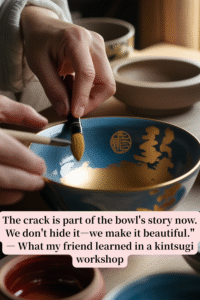
“My first brush stroke was a disaster. The master looked at my work and said, ‘I’ve been doing this for 35 years and I still make mistakes. This is a practice, not a performance.’ We talked about wabi-sabi — finding beauty in broken things. He said: ‘The crack is part of the bowl’s story now. We don’t hide it — we make it beautiful.’ I repaired a bowl my grandmother had given me. I’ve continued practicing kintsugi at home. It wasn’t just an experience — it became something that helps me deal with stress and imperfection in life.”
What Priya wishes she’d known: take photos of the technique demonstration. She got so absorbed she forgot to document it and couldn’t remember all the steps when she tried at home.
The pattern across all three: initial awkwardness in the first 5–15 minutes, then a shift. The instructor’s patience mattered more than their credentials. What they remember months later is philosophical, not technical. None of them regret what they spent.
❓ Common Questions About Japanese Cultural Experiences
Will I look stupid if I do something wrong?
Probably not — and if you do, good instructors have seen worse. My friend accidentally used the wrong side of the tea bowl. The master gently corrected her: “Even Japanese people make this mistake. The correct way is to drink from the side without decoration, showing respect to the artisan’s work.” She wasn’t scolded. She learned. Normal beginner mistakes are part of the process. The only things that cause real problems are arriving very late (15+ minutes often means forfeiting payment) or being disrespectful during meditation.
Can I actually learn anything in 90 minutes?
Not enough to become a master. Enough to understand why people dedicate their lives to it — yes. Think of it like a TED Talk versus a college course. A 90-minute cultural experience is the TED Talk version. Emma’s tea ceremony didn’t make her an expert; it made her understand why the practice matters. She now notices things in Japanese culture — minimalism, attention to detail, intentional movements — that she never would have without those 90 minutes. That perspective shift is what people are paying for at the mid and premium tiers.
What if I can’t sit on the floor?
Tell them when booking or when you arrive. Most experiences have accommodations: chairs or back supports for tea ceremony, chair meditation for zazen, tables at Western height for crafts. My friend’s mother in her 60s with knee problems did a full tea ceremony seated in a chair. The master said: “The spirit of tea ceremony is hospitality. If you’re uncomfortable, we’re failing at that.” It’s not uncommon — they’ve handled it before.
Is the cancellation policy really that strict?
Yes — and for good reason. Most experiences book one group at a time. When you cancel last-minute, the master has blocked that time exclusively for you, materials have been prepared, and if a meal is included, food has been purchased. There’s no time to fill the spot with another booking. Typical policies: 50–70% refund with 7+ days notice, 20–30% with 3–7 days, no refund under 3 days or for no-shows. Don’t book for Day 1 of your trip, leave buffer time for transportation delays, and check whether your travel insurance covers this.
Do I need to know Japanese?
For experiences with confirmed English support: no. For DIY bookings through local venues: it helps significantly. More important than language is being able to understand the cultural significance of what you’re doing — which is why the quality of English support matters more than it might seem. Following movements without understanding why they exist is a much thinner experience.
How to Book Without Stress: Practical Notes From Someone Who Overthought This
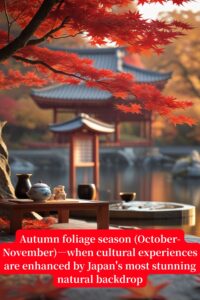
Timing matters more than most people expect. Premium experiences and anything during cherry blossom season (late March through April) or autumn leaves (November) fill up weeks or months in advance. The general rule: book premium experiences two months out, mid-tier three to four weeks before your trip. Budget experiences can sometimes be last-minute, but during peak seasons, don’t count on it.
On what to wear: the single most consistent piece of advice from everyone who’s done a floor-based experience is to not wear tight jeans. Loose, comfortable trousers. Layers, because traditional buildings can be cold in winter and poorly air-conditioned in summer. Shoes that slip off easily — you’ll be removing them. Clean socks. (This sounds obvious until it isn’t.)
Strong perfume is worth skipping. In enclosed traditional spaces, it’s considered inconsiderate, and it can genuinely affect the experience for others in small group settings.
Arrive ten minutes early. Not thirty — that gets awkward. Not two — that’s stressful for everyone. Ten minutes is exactly right.
If meditation or extended sitting is involved, eat lightly beforehand. Multiple people have learned this the hard way. Put your phone on silent — not vibrate. In a room where people are trying to sit quietly, a buzz against a wooden floor is very loud.
Ask before taking photos. Some moments are fine to document; others aren’t. Good instructors will tell you, but asking first is always the right move.
One thing people consistently underestimate: how much processing time you need afterward. My friends who did zazen or tea ceremony all said the same thing — they needed thirty to sixty minutes of quiet before moving to the next item on their itinerary. Don’t schedule something intense immediately after. Let it settle.
After you’re home, leave a specific review. Not “amazing!” — but what, specifically, made it worth doing. Future travelers are exactly where you were six weeks ago: confused, tabs open, hoping someone left them something useful.
→ Browse experiences on Wabunka
What to Remember Before You Book
There’s no universally “correct” experience. There’s the experience that matches what you actually want — which is a different question, and one only you can answer.
The budget tea ceremony isn’t less valid than the private session with a master. They’re doing different things for different people. What matters is being honest with yourself about which one you are before you hand over your credit card.
The thing worth pushing back on, gently, is the idea that more expensive automatically means more authentic. It often correlates. But a high-priced experience in a beautiful venue with a vague instructor will teach you less than a mid-tier experience with someone who genuinely wants you to understand what they’ve spent thirty years learning. The five factors — instructor credentials, group size, duration, English support, venue — are more reliable signals than price alone. Use them on whatever platform you’re booking through, whether that’s Wabunka, Viator, or a temple’s own website.
Six months after Emma’s tea ceremony, she doesn’t think about what she spent. She thinks about ichi-go ichi-e — the idea that this moment, exactly this moment, will never happen again in quite the same way. She said it changed how she pays attention to things.
That’s not something you get from a listing description. It’s something you get from ninety minutes with someone who has thought about it every day for decades.
Worth finding. Worth being patient about finding well.
Disclosure
This article contains affiliate links. If you book through Wabunka via the links here, a small commission may be earned at no additional cost to you. This supports GlowCache and allows continued research like this.
Research basis: comparison of 50+ cultural experience providers across Wabunka, Viator, GetYourGuide, TripAdvisor, and direct booking platforms. Analysis of 200+ reviews for patterns in satisfaction. Interviews with travelers from the US, Singapore, Vietnam, and Australia. Personal attendance at cultural experiences in Tokyo.
Both positive aspects and limitations of every option are included, as are alternatives to Wabunka for different budgets and preferences.
📎 References
- Wabunka Official Site
- Analysis of 50+ cultural experience providers across multiple booking platforms
- 200+ customer reviews analyzed for patterns in satisfaction and value perception
- Interviews with travelers from USA, Singapore, Vietnam, and Australia
- Comparative pricing research across Tokyo, Kyoto, and Osaka
Related Reading
Previous Article: Authentic Japanese Cultural Experiences: What I Learned After My Friend Asked for “Something Really Japanese”
The companion article where the research journey started — how helping one friend find a zazen experience in Kyoto turned into a 20-hour deep dive.
About the Author
Miyabi | GlowCache
Tokyo-based writer and researcher focused on helping international travelers find meaningful cultural experiences in Japan — without the guesswork. When not obsessively comparing tea ceremony listings, probably failing at matcha whisking technique.
GlowCache – Bringing Japanese Culture to the World 🌸


コメント