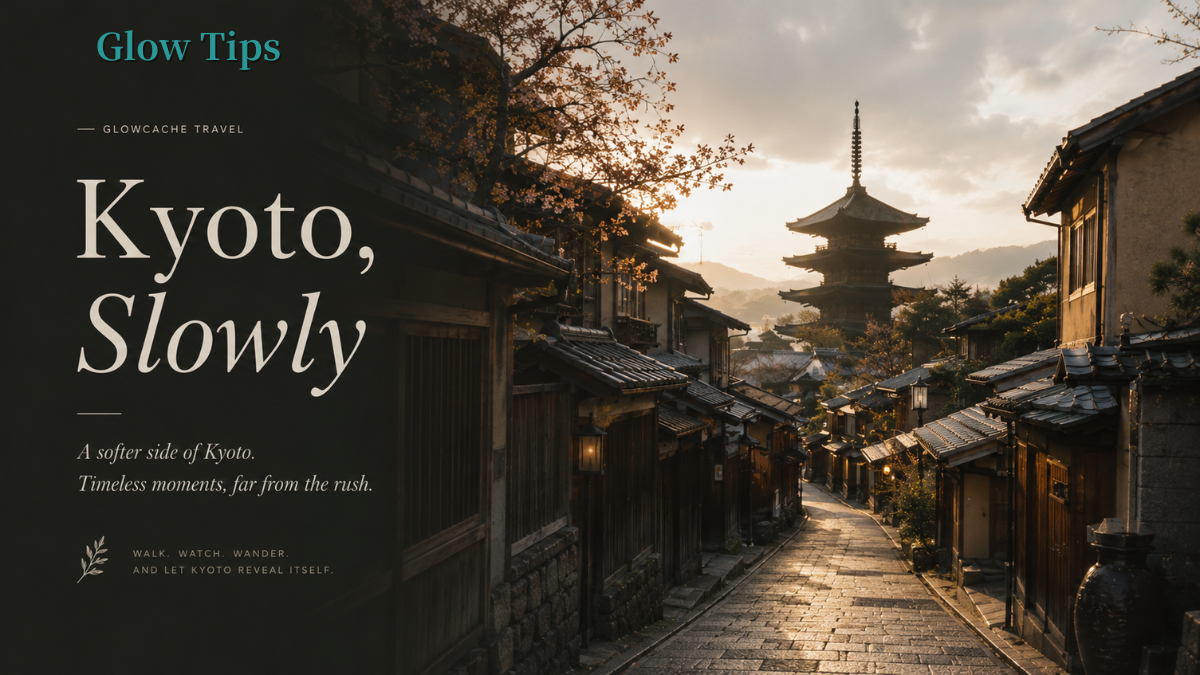
- The Problem With Planning Kyoto From Scratch
- ⚡ Quick Verdict: Who This Is For
- What Kind of City Kyoto Actually Is
- Where to Stay in Kyoto: Three Areas Worth Knowing
- How to Find Hotels in Kyoto: Why Japanese Travelers Book Differently
- How to Spend 2–3 Days in Kyoto: Priorities, Not a Schedule
- FAQ: Common Questions About Planning a First Trip to Kyoto
- Where to Book
- Not the Best Fit If
- Disclosure
The Problem With Planning Kyoto From Scratch
I see Emma every year.
First trip to Japan. Chose Kyoto because it sounded old, important, vaguely spiritual. The kind of place you’re supposed to go. Then someone had to actually plan it — and somehow that someone became her.
Here’s what I’ve noticed, watching people arrive in this city for the first time: the research doesn’t fail them. The lists are accurate. The temples are real. What’s missing is the frame — some sense of what kind of city this actually is before you start filling in the itinerary.
This is that conversation. Not fifteen things to do. Not a hotel roundup. Just the frame.
⚡ Quick Verdict: Who This Is For
- Kyoto is your first time, and you don’t know where to start
- You have 7–10 days in Japan total, with 2–3 days in Kyoto
- You want to see the famous places — but not just pass through them
This guide is not for you if:
- You’ve been to Kyoto before
- You’re looking for hidden locals-only spots
- You want a minute-by-minute schedule
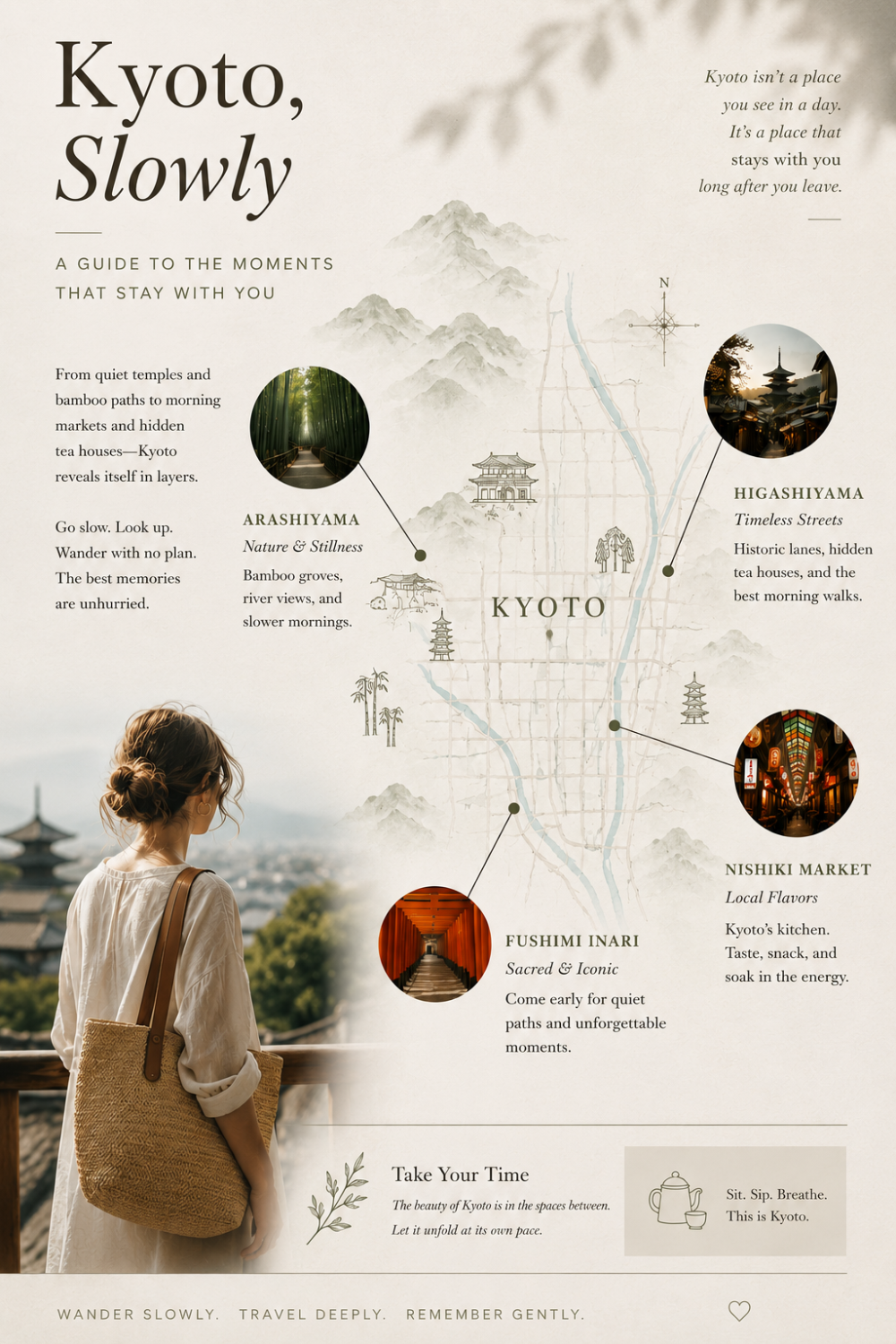
What Kind of City Kyoto Actually Is
Tokyo and Kyoto are two hours apart by bullet train. The distance feels much larger than that.
Tokyo is vertical and forward-moving. It tears things down and rebuilds constantly. Kyoto is the opposite — horizontal, layered, stubbornly intact. It was Japan’s imperial capital for over a thousand years. It survived World War II largely undamaged, which is why you can still walk down streets lined with wooden machiya townhouses that predate most Western nations.
The thing that surprises first-time visitors: Kyoto doesn’t announce itself.
Walk out of the station and you see office buildings, convenience stores, chain restaurants. It looks ordinary. Then you turn into a side street and the air changes. That’s the thing about this city — the surface is unremarkable. The interior is extraordinary. Once you understand that, you stop looking for Kyoto on the main roads and start finding it in the spaces between them.
Where to Stay in Kyoto: Three Areas Worth Knowing
Kyoto Station Area
The practical choice. Subway access, Shinkansen connections, department stores, restaurants — all within walking distance. If you’re arriving late, leaving early, or moving between cities, staying near the station removes friction.
What it doesn’t give you: any sense that you’re in Kyoto. The atmosphere is transit hub, not ancient capital.
Gion and Higashiyama
This is the Kyoto people picture before they arrive. Cobblestone lanes, latticed wooden facades, the occasional glimpse of a maiko — an apprentice geisha — moving quickly between engagements at dusk.
Staying here means the city starts the moment you step outside. The tradeoff: it’s farther from the station, quieter at night, and restaurant options thin out after 9pm. Some people love that. Some find it limiting.
Kawaramachi and Shijo — Where I’d Put a First-Timer
Central enough to reach both Gion and the station on foot. The Kamo River runs alongside it, lined with restaurants at every price point. You can move in any direction without committing to one part of the city.
For two people on a first trip, this is the base that makes everything easier. When you’re still figuring out how the city works, being in the middle of it — literally — is the right call.
A Note on Ryokans
A ryokan is a traditional Japanese inn — tatami floors, futon bedding, yukata robes, multi-course kaiseki dinner included. It’s an experience as much as accommodation.
One thing to know before booking: ryokans typically price per person, not per room. A two-person booking with meals included adds up faster than a hotel would. Read the plan details carefully, and calculate the actual two-person total before confirming.
For a 2–3 day stay, one night in a ryokan — with the rest in a regular hotel — is the structure that works best. One night is enough to understand what the format is. It tends to change what the whole trip feels like.
How to Find Hotels in Kyoto: Why Japanese Travelers Book Differently
The platforms most international travelers default to — Agoda, Booking.com, Expedia — are built for a global audience. They do fine. But they tend to surface international hotel chains and large tourist-facing properties. They often miss the smaller places entirely.
Rakuten Travel is where Japanese people actually book.
Launched in 2001, it’s Japan’s largest local travel platform by domestic accommodation listings. It’s part of the Rakuten Group — a conglomerate with over 70 businesses spanning e-commerce, fintech, mobile, and more, with 2 billion members worldwide. Think of it as the Amazon of Japan, except it also has a travel arm that’s been the default booking platform for Japanese travelers for over two decades. There’s a full English interface, USD pricing, and it takes international cards.
What’s different about searching here:
- Family-run ryokans that don’t list on Western platforms show up here as standard results. If you want somewhere that doesn’t feel like a hotel, this is where to look.
- Meal plan details are specific. Japanese accommodations often include breakfast or dinner. Rakuten Travel tells you exactly what that means — kaiseki cuisine, seasonal ingredients, in-room or restaurant dining. Other platforms often just say “breakfast included.”
- Japanese guest reviews, each with a translation button. A different perspective than international tourist reviews — often more useful for understanding what a property is actually like day-to-day.
- Availability during peak seasons — cherry blossom and autumn leaves — can differ significantly from international OTAs. Worth checking both.
The approach: search where you usually search, then spend five minutes on Rakuten Travel before you book. You’re not replacing one with the other. You’re seeing the full picture.
Search Kyoto hotels the way Japanese travelers do
Japan’s largest local booking platform. Family-run ryokans, detailed meal plan info, Japanese guest reviews — with a full English interface.
How to Spend 2–3 Days in Kyoto: Priorities, Not a Schedule
Most first-time visitors to Japan split their time — a day or two in Tokyo on arrival, two or three days in Kyoto, maybe a day in Osaka or Nara before heading home. Two or three days, used well, is enough to understand what this city is.
What follows isn’t a minute-by-minute plan. It’s a set of priorities — and the one piece of practical information that changes each of them.
Priority One: Walk Higashiyama in the Morning
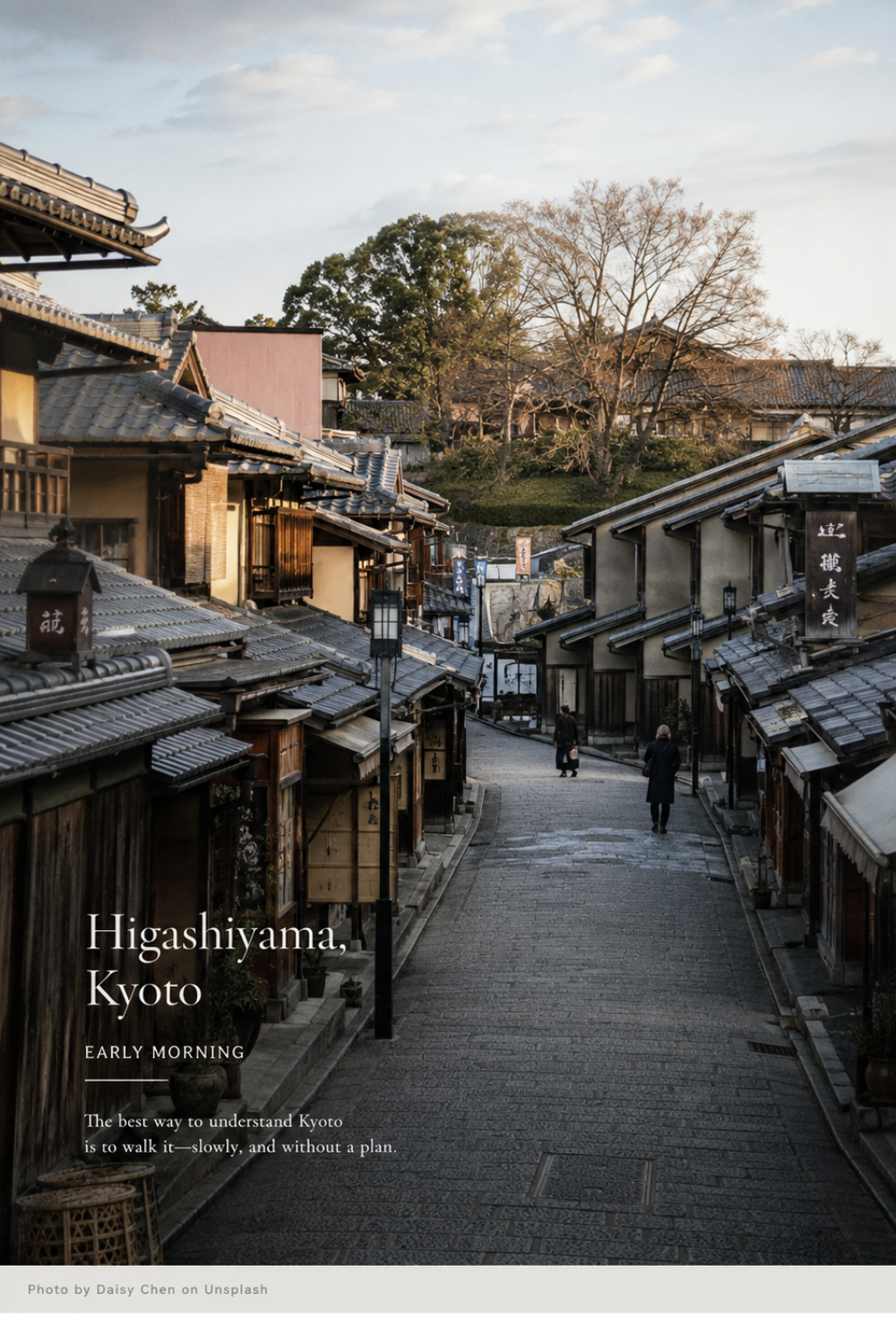
From Kiyomizudera temple, head north on foot. The path winds through stone-paved slopes lined with wooden storefronts, ceramic shops, and machiya with flower arrangements in the entryways. You’ll pass through Sannenzaka and Ninenzaka without realizing you’ve moved from one to the other. By the time you reach Gion, an hour has passed and you haven’t checked your phone once. That’s the walk.
Be at Kiyomizudera before 9am. After that, it’s a crowd management exercise. The same path that feels meditative at 8am feels like a theme park queue at 11am. This is the single most important logistical fact about Kyoto.
If you’re going to rent a kimono — and the case for it is stronger than it sounds — this is the day and this is the place. Walking Ninenzaka in a kimono stops feeling like a costume somewhere around the second stone step. The street was built for exactly this pace. Rental shops in the area handle fitting, accessories, and outdoor photography. Book in advance; weekends fill faster than you’d expect.
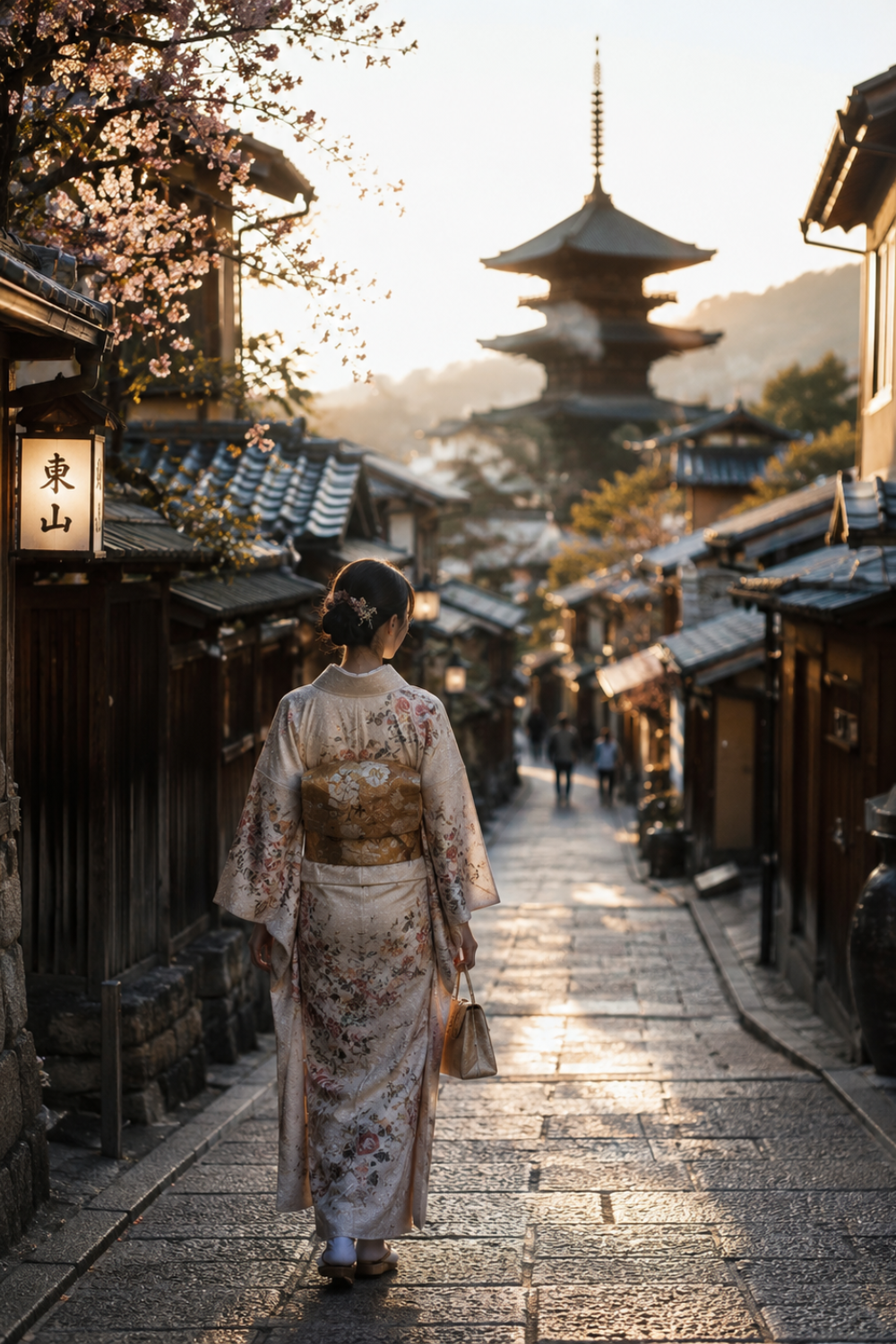
→ Kimono rental with outdoor photography — Higashiyama / Gion area (KKday)
Come back to Gion at dusk. It’s a different place. The day-trippers have left, the lanterns are lit, and the streets have a quiet that’s hard to find anywhere else in a city this visited.
Priority Two: Arashiyama — Embarrassingly Early
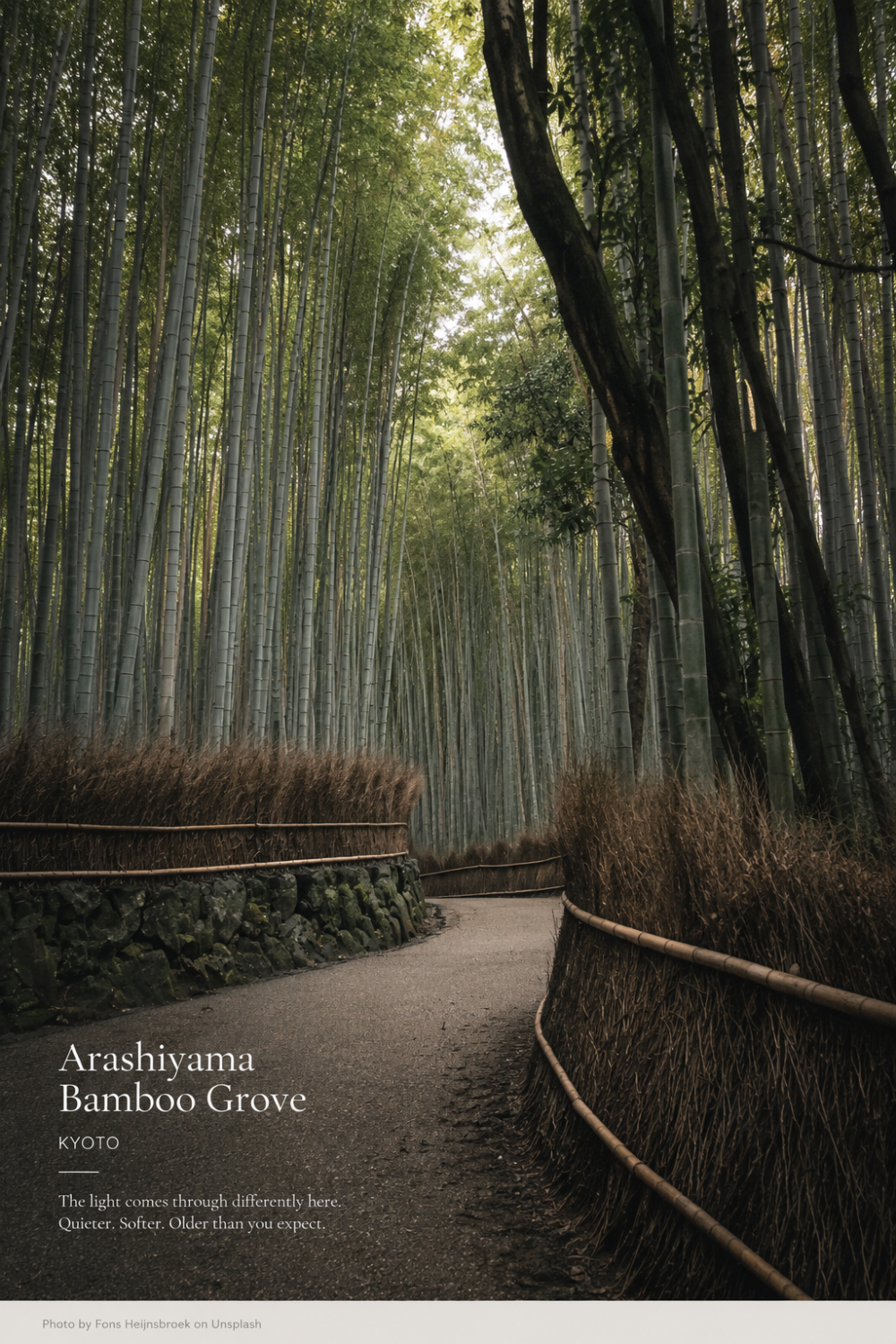
The bamboo grove (Arashiyama Bamboo Grove) has a reputation that sounds overhyped. Before 8am, it isn’t. The light comes through differently. The sound of the bamboo moving is something you don’t expect. It’s one of those places that actually delivers — but only at the right time.
By 9am, it’s a different experience entirely.
Don’t judge Arashiyama by the bamboo grove alone. Tenryuji temple’s garden is quieter and, to my eye, more interesting. The Oi River runs through the western part of the district — walk along it, sit for a while. Arashiyama has a slower texture than Higashiyama. Worth staying for.
If you have an afternoon free in this part of the city, Toei Kyoto Studio Park (Eigamura) is fifteen minutes away by JR. It’s a working film studio where period dramas are still produced — open to the public. Stranger and more interesting than it sounds on paper.
→ Toei Kyoto Studio Park entrance ticket (KKday)
Priority Three: Fushimi Inari or Kinkakuji — Pick One
Both are worth seeing. Both are better early. You probably can’t do both well in the same day.
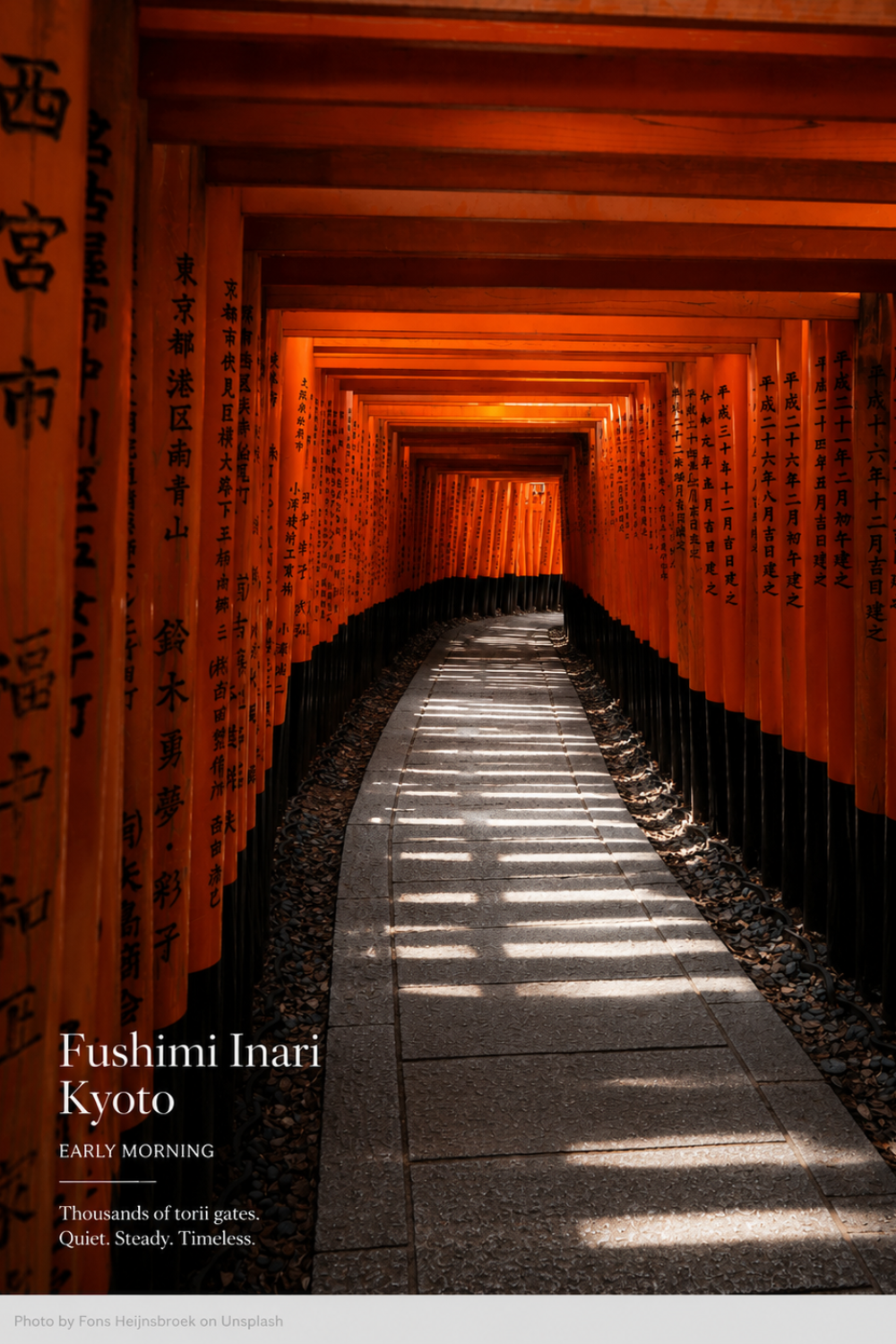
Fushimi Inari’s thousand torii gates (Fushimi Inari Taisha) are at their most atmospheric before 8am — mist, quiet, the gates disappearing into the mountain. By noon it’s a different experience. You don’t need to climb the whole mountain. Halfway up and back is enough to understand the place.
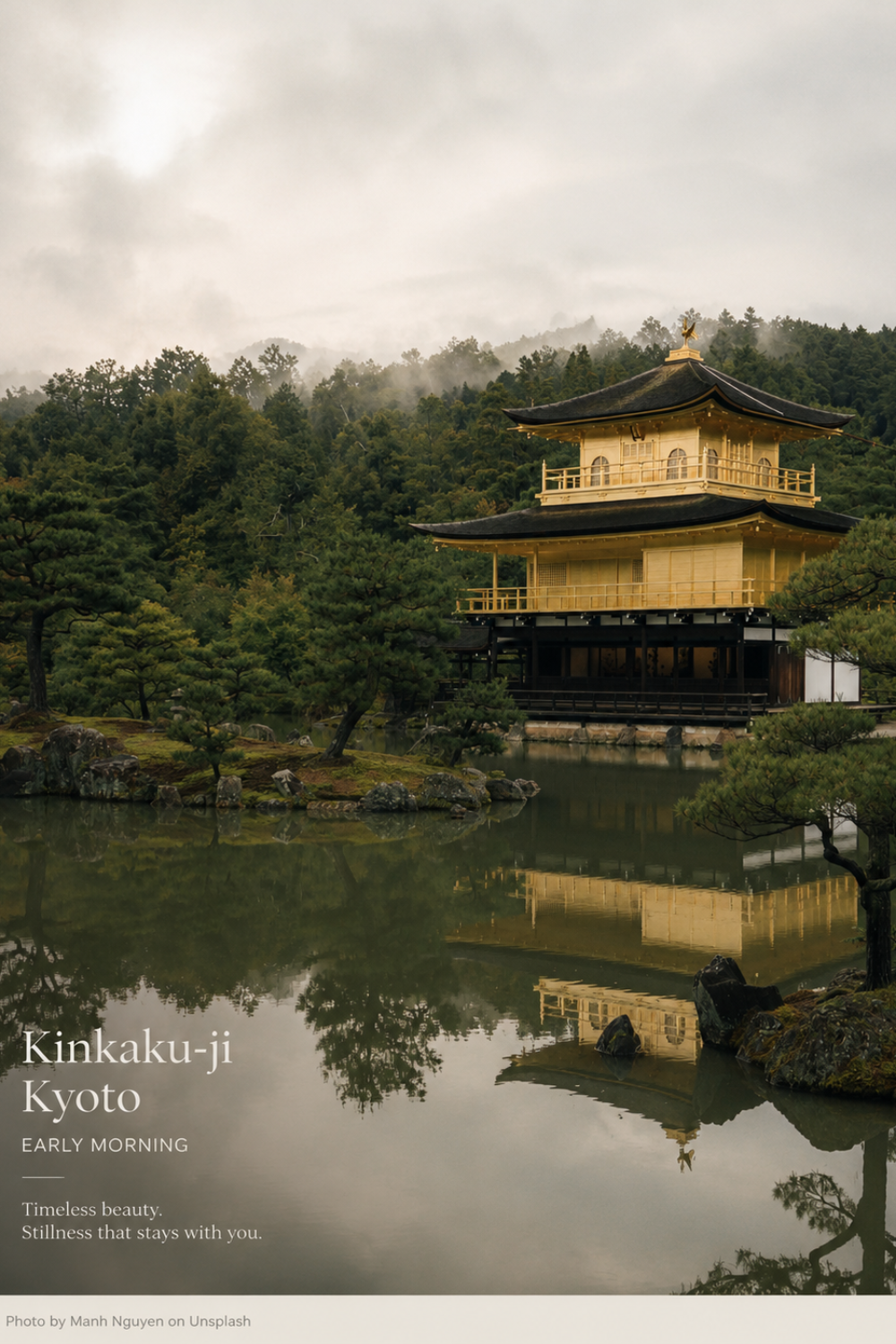
Kinkakuji — the Golden Pavilion — is one of those landmarks that exceeds expectations, which surprises people who assume the famous thing will disappoint. Real gold leaf. The reflection in the pond. It’s genuinely that beautiful in person.
Five minutes from Kinkakuji: Ryoanji’s rock garden. Fifteen stones arranged so that you can never see all of them from any single vantage point. No one knows exactly why. Sit with it for more than five minutes — the garden rewards patience in a way that most tourist sites don’t.
Nishiki Market — First Day and Last Day
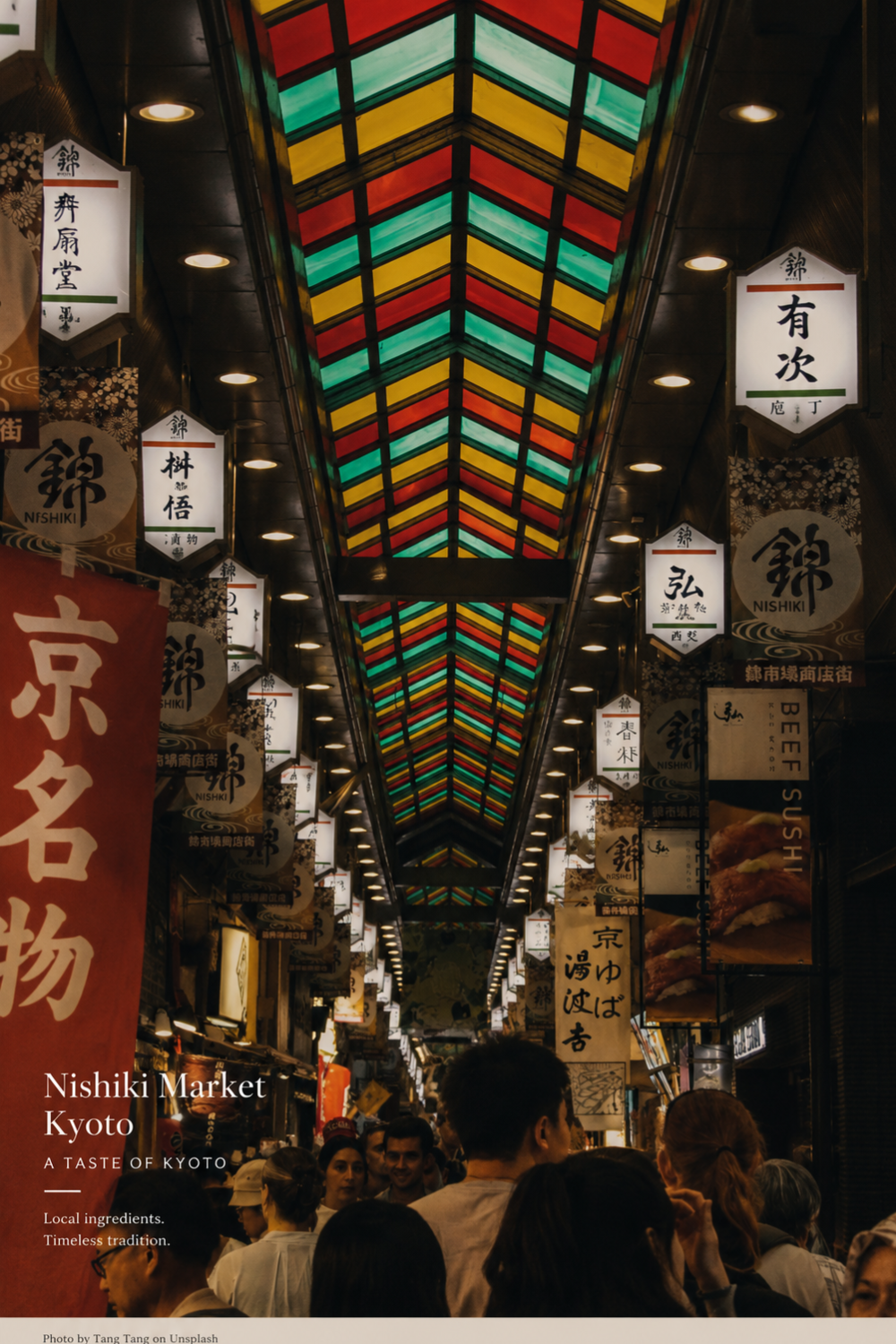
A covered market one block from the Kawaramachi area, four centuries old (Nishiki Market). Walk-and-eat food, vendors who’ve been doing the same thing for decades. Go on your first day to get oriented. Go again on your last day — you’ll notice things you missed the first time.
For a proper sit-down meal, two reservations worth making: Kyoto’s sushi tradition is lighter than what most people expect — seasonal ingredients, pickled fish, less tuna-forward than the Tokyo style. Worth trying at least once.
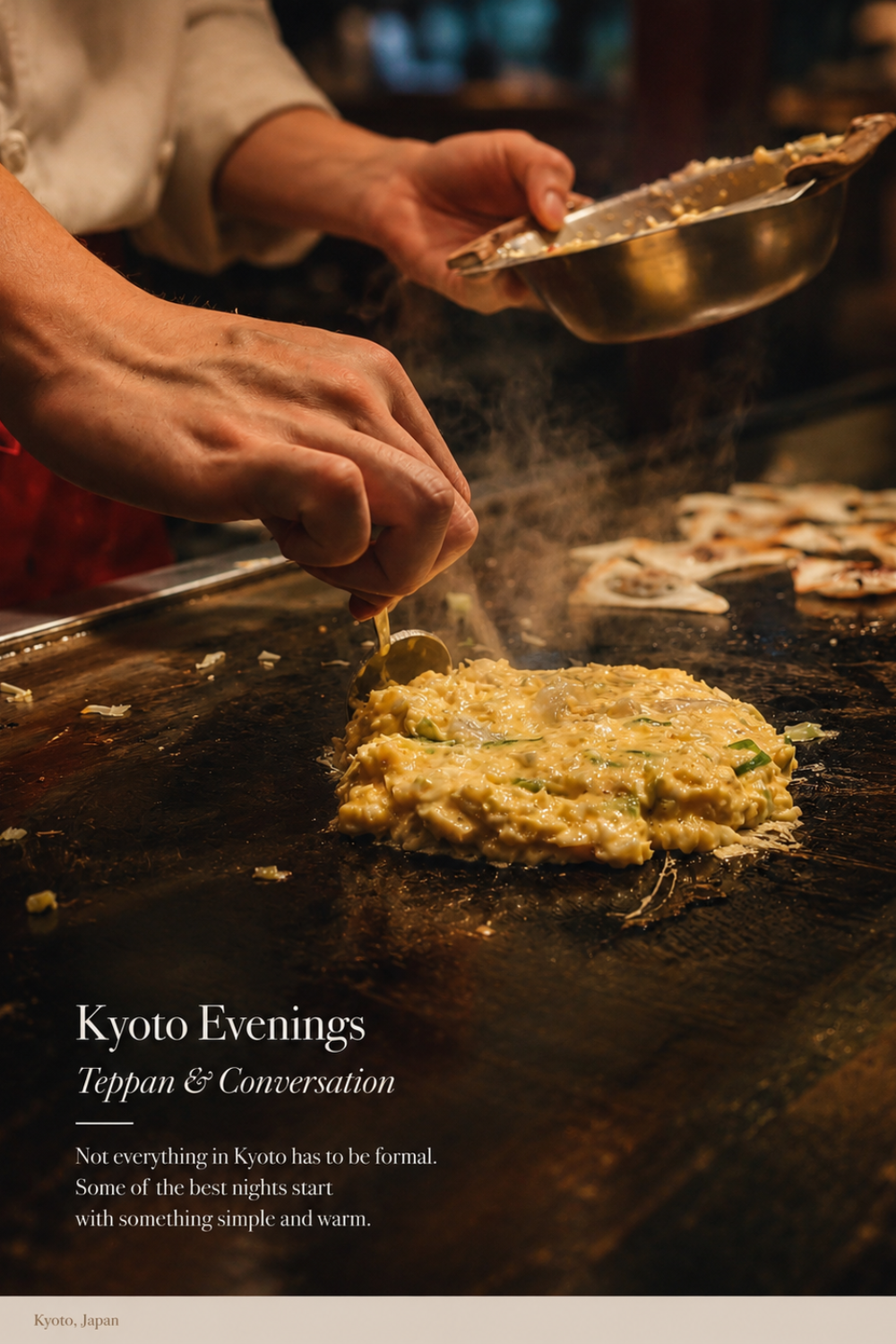
Okonomiyaki, the savory Japanese pancake, is the other dish that’s genuinely hard to explain until you’ve had a proper version. Watching it being made on an iron griddle in front of you is half the experience.
→ Kyoto sushi — 鮨まつもと (byFood)
→ Okonomiyaki — 千房 Kyoto (byFood)
FAQ: Common Questions About Planning a First Trip to Kyoto
Do I need to speak Japanese to get around Kyoto?
No. Transit signage is bilingual, most tourist-facing restaurants have English or picture menus, and hotel staff at international properties speak English. A translation app handles the gaps — and honestly, pointing at a menu still works fine.
When is the best time to visit Kyoto?
Cherry blossom season (late March to mid-April) and autumn leaves (mid-November) are Kyoto at its most beautiful — and its most crowded. For a first visit without peak-season pressure, May or October are the most comfortable months. The city is still fully itself, just quieter.
Is Kyoto expensive?
It depends entirely on how you travel. Convenience store meals and free temple grounds make a low-cost trip possible. Ryokans with kaiseki dinner and advance-reservation restaurants push costs up significantly. Most first-time visitors land somewhere in between — and don’t regret the one or two splurges.
How do I get from Tokyo to Kyoto?
Shinkansen — the Nozomi from Tokyo Station to Kyoto Station takes approximately 2 hours 15 minutes. On the return journey, take a window seat on the right side of the train. On a clear day, you’ll see Mt. Fuji. Plan for it.
Do I need a JR Pass?
For a trip centered on Kyoto, the math often doesn’t favor the JR Pass. Calculate your expected train costs first. If you’re moving extensively between cities — Tokyo, Kyoto, Hiroshima, Osaka — it usually makes sense. For a Kyoto-focused trip, it may not. Run the numbers before you buy.
Where to Book
Hotels and Ryokans
Search Kyoto accommodations on Rakuten Travel — Japan’s largest local booking platform, with a full English interface and the deepest inventory of ryokans and family-run inns.
Experiences and Dining
- Kimono rental — Higashiyama / Gion area (KKday)
- Toei Kyoto Studio Park ticket (KKday)
- Kyoto sushi — 鮨まつもと (byFood)
- Okonomiyaki — 千房 Kyoto (byFood)
Not the Best Fit If
This guide is written for first-time visitors who want a framework, not a packed itinerary. If you’ve been to Kyoto before, you don’t need this. If you’re looking for a minute-by-minute schedule, this isn’t that. If hidden local spots are the priority, the places covered here are mostly famous — intentionally so.
Disclosure
This article contains affiliate links to Rakuten Travel, KKday, and byFood. If you book through these links, I may earn a small commission at no additional cost to you. I only include services I’d recommend regardless — the research is mine, the links are how GlowCache stays independent.
Image Credits
Photos by Daisy Chen, Tang Tang, Fons Heijnsbroek, Manh Nguyen, and other creators via Unsplash.
Miyabi | GlowCache
Tokyo-based. Writing about Japanese beauty, culture, and the parts of Japan that don’t always make it into the guidebooks.


コメント