- Contents
- 💭 Empathy & Realization
- ⚡ Quick Verdict: Who This Is For
- 🧪 Ingredients: What “Vitamin C” Actually Means Here
- 📝 How to Use: Building It Into a Simpler Routine
- 💡 Texture & Feel
- 💪 Visible Effects
- 🗣️ Real Voices from Real Users
- ❓ Common Questions About Obagi C Serum Gel
- ✨ Where to Buy Obagi C Serum Gel
- 📎 Reference
Contents
💭 Empathy & Realization
My friend Maco, who runs LOLO JAPAN, texted me last week with a customer service question she didn’t expect to have. “Someone asked me if this is really Obagi,” she wrote. “Like, real Obagi.” I could hear the mild exasperation through the screen.
It’s a fair question, and also the wrong one, and untangling the difference took me longer than I’d like to admit.
Here’s the thing about the name Obagi: in the US, it belongs to a dermatologist-founded line sold through doctors’ offices, the kind of brand associated with clinical pricing and a consultation first. In Japan, Obagi is something else entirely — a Rohto Pharmaceutical line that sits on drugstore shelves next to Melano CC, priced like a drugstore product because that’s exactly what it is. Same name, borrowed under license, built by two completely different companies making two completely different things.
I don’t think this is a scandal. I think it’s a labeling problem nobody bothered to fix, and it means a lot of people are typing “is Japanese Obagi legit” into a search bar late at night instead of just buying the thing.
So let’s actually look at what’s in the tub. Obagi C Serum Gel is Rohto’s all-in-one — the kind of product that claims to fold your toner, essence, serum, and moisturizer step into one scoop from a spatula. If you’ve ever stood in your bathroom at the end of a long day, staring down a routine you don’t have the energy for, this is aimed squarely at you. Especially if “vitamin C serum” is a phrase that makes you brace for redness rather than glow.
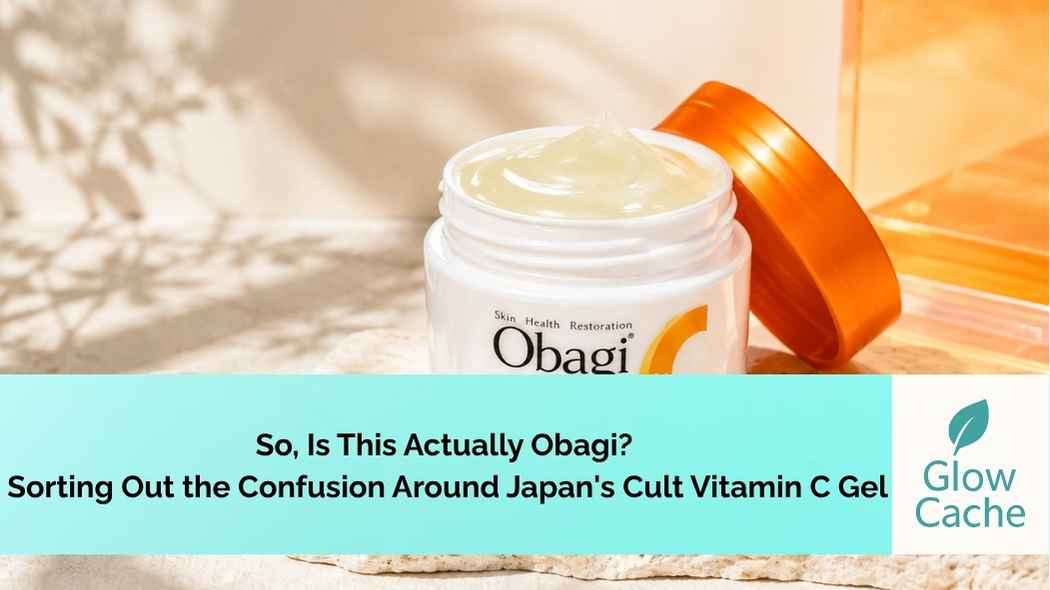
Obagi C Serum Gel is a Japanese pharmacy-brand vitamin C gel moisturizer, made by Rohto — not the clinical-grade US Obagi you may be picturing, but its own well-established line with a long-running following in Japan.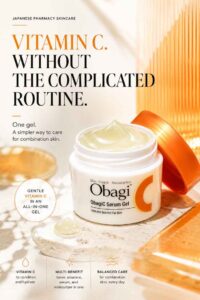
⚡ Quick Verdict: Who This Is For
Before the deep dive, here’s the short version.
This is a good fit if you:
- Want to cut a multi-step routine down to one or two products without giving up on vitamin C
- Have combination skin (oily T-zone, drier cheeks) and struggle to find one texture that works everywhere
- Have reacted to strong vitamin C serums before and want something gentler to start with
- Are curious about Japanese pharmacy skincare but don’t want to build an entirely new routine from scratch
This is probably not for you if:
- You want a high-percentage vitamin C serum for aggressive dark spot correction
- You’re specifically looking for the US clinical Obagi line — this is a different company’s product
- You prefer very lightweight, watery textures over a gel-cream consistency
🧪 Ingredients: What “Vitamin C” Actually Means Here
Here’s something that trips people up: Obagi C Serum Gel’s official ingredient page doesn’t call vitamin C a brightening agent. It calls it a skin-conditioning and moisturizing ingredient. If you’re picturing dramatic before-and-afters, that phrasing might read like the company is underselling its own product.
It isn’t. In Japan, cosmetics — as opposed to quasi-drugs — are legally restricted from making direct efficacy claims. A brand can put pure ascorbic acid in a formula and still can’t say “this will fade your dark spots” without the product being reclassified into an entirely different regulatory category. The careful, almost modest language on the ingredient list isn’t a red flag. It’s a company staying inside the lines.
In plain terms, though, here’s what that regulatory phrase is standing in for: smoother-looking texture, a tone that reads brighter and more even over time, and skin that generally feels calmer and more resilient day to day. The chemistry hasn’t changed — only the vocabulary the label is legally allowed to use.
What’s actually in the gel, according to Rohto’s own product page, are three named actives. Ascorbic acid — pure vitamin C — does the heavy lifting, though it’s also the form most likely to cause tingling on reactive skin, worth knowing if you’ve been burned by a strong vitamin C serum before. 3-O-Ethyl Ascorbic Acid, a vitamin C derivative, is generally considered gentler and more stable, and it works alongside the pure form here. Then there’s Palmitoyl Dipeptide-18, marketed as “Nanofiber Gel,” which is less about brightening and more about how the product feels and moves on skin — this is the ingredient responsible for the gel-not-cream texture.
| Named Active | Official Classification | What It’s Doing |
|---|---|---|
| Ascorbic Acid (Pure Vitamin C) | Skin-conditioning / moisturizing | Primary active; can cause tingling on reactive skin |
| 3-O-Ethyl Ascorbic Acid | Skin-conditioning / moisturizing | Vitamin C derivative; generally gentler and more stable |
| Palmitoyl Dipeptide-18 (“Nanofiber Gel”) | Moisturizing | Responsible for the gel’s distinctive texture and feel |
For combination skin specifically, this combination makes sense on paper: a texture lighter than a cream but more substantial than a watery serum, without a percentage listed anywhere that would make sensitive skin nervous going in.
📝 How to Use: Building It Into a Simpler Routine
The whole premise of this gel is replacement, not addition. After cleansing (and toner, if that’s still part of your routine), Rohto’s own instructions call for a cherry-pit-sized amount, applied with the included spatula, morning and night. There’s no separate essence, serum, or moisturizer step meant to follow — the gel is designed to be the last thing you do before sunscreen in the morning or before bed at night.
For anyone easing off a longer routine rather than replacing it all at once, a realistic test is swapping out just the serum and moisturizer steps for two weeks, keeping cleanser and sunscreen as-is, before deciding whether to simplify further.
On cost per use: the tub is a standard 80g size, and at a cherry-pit amount per application, one tub reasonably covers two to three months of twice-daily use — a cost-per-application that comes in well below what most people spend on a separate toner alone, let alone a full multi-step stack.
One practical note for sticky, humid afternoons in particular: because the gel already carries moisturizing and barrier-supporting ingredients, most users don’t need to layer a separate cream over it, even at night.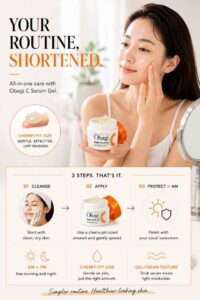
💡 Texture & Feel
The texture is the detail most reviewers mention first: a gel-cream somewhere between a thick serum and a light moisturizer, with a soft amber tint from the concentration of vitamin C. It’s dispensed with a built-in spatula rather than a pump, which keeps the formula more hygienic but also makes the application feel a little more deliberate than squeezing a tube.
Across reviews, the most consistent description is that it spreads easily without dragging, and sinks in without the film that heavier creams can leave behind. The scent — a light grapefruit — comes up often, usually described as pleasant rather than overpowering, fading quickly rather than lingering into the day.
For combination skin, the texture question that matters most is whether one product can behave differently across the face, and that does seem to be the case here: reviewers describe faster absorption on oilier zones and more visible moisture retention on drier areas. It reads as deliberately “in-between” rather than committing hard to either gel or cream — which makes sense for a product claiming to do six jobs at once.
💪 Visible Effects
The first two weeks
Early feedback tends to focus on texture rather than tone — skin feeling smoother, pores looking slightly less obvious in good light, less of the tight-then-oily cycle combination skin often goes through. This lines up with what the ingredient list suggests: the moisturizing actives work fast, while vitamin C’s brightening effects build more slowly.
Weeks three through six
This is where reviewers who stick with it start mentioning tone specifically — a more even look, particularly around recurring adult breakouts and the marks they leave behind. A few reviews mention this gel specifically in the context of managing repeat breakouts along the jawline and chin, describing a preference for one simple product over a complicated routine during flare-ups.
The honest caveat
Not every review is glowing. A recurring piece of feedback is that a little goes further than expected, and that over-applying can leave a slightly heavier, almost occlusive feel — which matters if you’re already prone to congestion. The advice that shows up most often from experienced users: start with less than you think you need, and build up from there.
So if the original question was whether one gel can actually replace a vitamin C routine for combination skin without triggering irritation, the honest answer across the reviews is: for the moisturizing and mild-brightening middle ground, more consistently than most people expect. For anyone chasing fast, dramatic dark-spot correction, this was never built to compete with a high-percentage vitamin C serum, and it shouldn’t be judged like one.
⚠️ Not the best fit if…
- You’re looking for a high-percentage active vitamin C serum specifically for stubborn hyperpigmentation
- You have very oily, congestion-prone skin and tend to react poorly to richer textures
- You’re expecting this to be identical to a product from US Obagi Medical
🗣️ Real Voices from Real Users
❓ Common Questions About Obagi C Serum Gel
Is this the same Obagi sold by dermatologists in the US?
No. Obagi C Serum Gel is made by Rohto Pharmaceutical for the Japanese market. US Obagi Medical is a separate company under different ownership, selling different formulations through medical providers. The two share a name origin, not a product line.
Will this irritate sensitive or reactive skin?
It contains pure ascorbic acid, which can cause tingling for some reactive skin types, alongside a gentler vitamin C derivative. Most sensitive-skin users who leave feedback describe tolerating it well with a thin layer, though anyone with a known vitamin C sensitivity should patch test first.
Can it really replace a full skincare routine?
For the toner-through-moisturizer portion of a routine, most feedback says yes. It isn’t marketed or formulated to replace a dedicated sunscreen, and reviewers who wanted stronger active-ingredient results still layer additional targeted products on top.
How long does one tub actually last?
At the recommended cherry-pit-sized amount per use, applied twice daily, the standard 80g size reasonably lasts two to three months for most people.
Is it a good fit for humid or hot, sticky weather?
The lightweight gel-cream texture and fast absorption are frequently cited as reasons it works well on days when a heavier cream feels unbearable, without needing to swap in a separate lighter product for the season.
✨ Where to Buy Obagi C Serum Gel
Obagi C Serum Gel isn’t stocked in most US drugstores, so if you’re shopping from the US or internationally, here’s where to find it reliably.
Shop on YesStyle
Browse Rakuten ROOM
Ship via Rakuten Global Express
Shopping from Singapore or Malaysia? LOLO JAPAN carries it directly.
Shop on Shopee (Singapore)
Shop on Shopee (Malaysia)
Reference Price (Japan domestic retail): approximately ¥4,400 for the 80g size.
📎 Reference
- Product images © Obagi Japan / Rohto Pharmaceutical

コメント