- 💭 Empathy & Realization
- ✅ Quick Verdict: Who This Medicated Aloe Cream Works Best For
- 🧪 Ingredients: Why This Medicated Aloe Cream Works for Dry, Cracked Skin
- 📊 Fragrance vs. Fragrance-Free: Which One’s Right for You
- 🖐️ Texture & Feel: What a Medicated Cream Feels Like on Dry, Rough Skin
- 💪 Visible Effects: Dry Hands, Cracked Heels & Rough Patches
- 🗣️ Real Voices: What Long-Time Users Are Saying
- ❓ FAQ: Aloins Eaude Cream, Answered
- ✨ Where to Buy Aloins Eaude Cream
- 📚 Reference
💭 Empathy & Realization
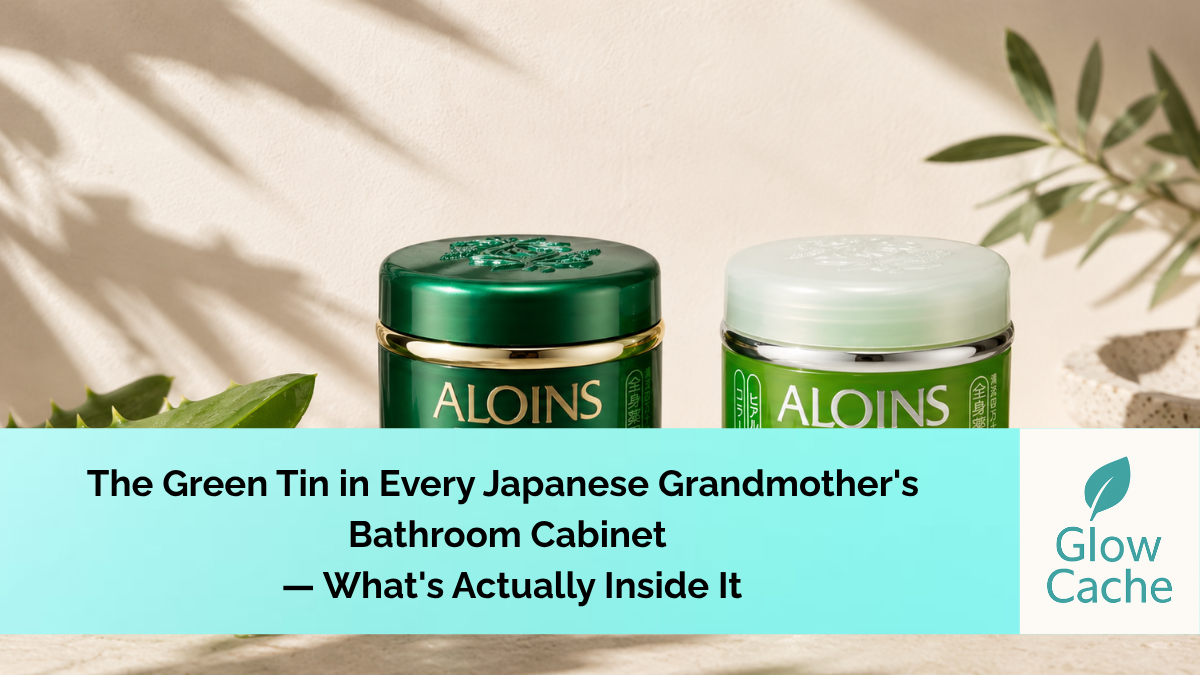
I don’t expect much from a cream that claims to do everything. Anything promising to work for hands, face, and hair all at once usually ends up doing a mediocre job at all three, a jack-of-all-trades tub gathering dust at the back of a cabinet. So when I first heard about a decades-old green tin still sitting on someone’s grandmother’s shelf, unmoved and unreplaced for as long as anyone could remember, I mostly let the story pass.
What stuck with me wasn’t the sentiment. It was the shelf life.
Products get replaced constantly: reformulated, rebranded, discontinued the moment a trend cycle moves on. A cream that has stayed exactly the same, in exactly the same tin, long enough to be inherited rather than repurchased, is either doing something right or getting away with something. I wanted to find out which.
There’s also a second, more practical thing going on underneath the nostalgia. Most of us don’t have one skin problem. We have several, scattered across the body, none of them severe enough to justify a dedicated product. Dry knuckles from washing dishes. A heel that cracks the moment the air conditioning kicks in for the season. A patch behind the ear that gets irritated after a fresh haircut. None of these need a specialist. They need something reliable, sitting within reach, that you don’t have to think too hard about reaching for.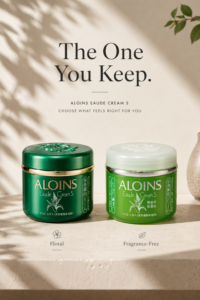
✅ Quick Verdict: Who This Medicated Aloe Cream Works Best For
Good for: Dry hands from constant washing or hand sanitizer, rough heels, minor chapping and cracking, skin that flares up when the weather or air-con shifts, and anyone who wants one jar that reasonably covers hands, elbows, and feet without buying three separate products.
Skip if: You’re looking for a lightweight, fast-absorbing daytime hand cream, or a face-first routine product. This is a thicker, medicated formula built for repair, not for layering under makeup.
Think of it less as a beauty product and more as a household staple, in the same category as a good hand soap or a first-aid ointment: something you keep around rather than shop for repeatedly, and reach for on the days your skin actually needs it rather than as part of a daily ritual.
🧪 Ingredients: Why This Medicated Aloe Cream Works for Dry, Cracked Skin
Aloe has been treated as a cure-all for longer than almost any other plant ingredient on record. Ancient China, Arabia, Greece, Rome: civilizations with nothing else in common all separately arrived at the same conclusion about this one succulent. In Japan, that history shows up in something smaller and more domestic. A lot of households of a certain generation kept a potted aloe plant by the kitchen door, ready to snap off a leaf for a minor cut or burn. Nobody was citing clinical studies. It was just what you did.
The aloe in this cream isn’t that backyard variety, though. It’s aloe vera, the gel-rich type more commonly used in skincare, organically grown along the Shimanto River, one of the last major rivers in Japan still classified as unpolluted.
Which brings us back to that earlier skepticism about products claiming to do everything. This one doesn’t lean on a single ingredient to cover hands, face, and body at once. Two ingredients split the job, and neither is pretending to be the other.
The medicated, skin-protecting claims this cream is legally allowed to make (helping prevent rough skin, razor irritation, and minor post-sunburn stinging) come from its listed active ingredient, glycyrrhetinyl stearate, a derivative of glycyrrhizic acid extracted from licorice root. Licorice has its own long medicinal history and is sometimes called the “king of herbal medicine” in Japanese herbal tradition for its anti-inflammatory properties.
The aloe extract, by contrast, is classified as a moisturizing ingredient rather than the active one. It’s rich in polysaccharides, believed to support water retention in the skin’s outer layer, not by treating anything, but by helping the skin hold onto moisture it already has. The formula also includes a form of hyaluronic acid modified to bind roughly twice the water of the standard version, plus a marine-derived collagen ingredient for added suppleness.
So it’s less a single hero ingredient doing something dramatic, and more a formula where an anti-inflammatory active and a moisture-retention extract each stay in their lane. Which, by the way, might explain the texture: nothing here is fighting for attention, so nothing feels like it’s overcompensating.
There’s also no trending peptide complex here, no exfoliating acid, nothing designed to make a headline on a label. A cream meant to be reapplied daily, on skin that’s already irritated or already dry, doesn’t need actives that ask something of the skin barrier. It needs ones that quietly support it and get out of the way.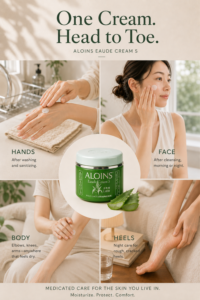
📊 Fragrance vs. Fragrance-Free: Which One’s Right for You
| Feature | Eaude Cream S | Eaude Cream S (Fragrance-Free) |
|---|---|---|
| Scent | Soft, soap-like floral | None |
| Active ingredient | Glycyrrhetinyl stearate | Glycyrrhetinyl stearate |
| Aloe & moisture support | Organic Shimanto aloe extract, hyaluronic acid, collagen | Same formula |
| Best for | Anyone who doesn’t mind a light scent lingering on hands | Sensitive skin, scent-averse households, or use near food prep |
Functionally, they’re the same cream. The decision comes down to whether you want the scent or would rather not smell anything at all, which for a cream you might be applying multiple times a day is a more personal call than it sounds.
🖐️ Texture & Feel: What a Medicated Cream Feels Like on Dry, Rough Skin
The texture is the part that surprises people who haven’t used a Japanese medicated cream before. It’s dense, closer to a balm than a lotion when you first scoop it out, but it doesn’t sit on the skin the way thick creams usually do. It melts in fast, leaves a soft, slightly plush finish, and doesn’t transfer onto your phone screen or a book five minutes later. That’s the “not sticky despite being thick” reputation this line has built over the decades, and it holds up.
A little goes further than expected. A thin layer massaged into rough patches (hands, elbows, heels) is usually enough; piling it on doesn’t seem to speed anything up.
The unscented version behaves identically in the hand. If anything, its absence of fragrance makes the texture more noticeable on its own, since there’s nothing distracting from how it actually feels going on. That’s either a plus or a non-event depending on how much you care about scent in the first place.
Because the formula sits closer to a balm than a body lotion, it’s not built for a quick all-over swipe after a shower the way a runnier lotion is. It works better applied deliberately, to specific dry spots, rather than smoothed across large areas in a hurry.
💪 Visible Effects: Dry Hands, Cracked Heels & Rough Patches
The hand version of this problem is specific enough that most people will recognize it immediately: knuckles that feel tight before they even look dry, a hangnail that catches on a sweater, the moment hand sanitizer stings a crack you didn’t know was there. That’s the use case this cream keeps showing up for — not a general “moisturizer” review, but a repeat purchase from people whose hands are in water, soap, or sanitizer more often than average.
Heels tell a similar story in a different register. It’s less about how they look and more about the small physical tells: a sock snagging on rough skin, the scrape of a heel against the opposite ankle at night, the moment a crack goes from cosmetic to genuinely uncomfortable to walk on. Reviewers who mention using it on feet tend to describe applying it before bed and pulling socks on over it, treating it more like an overnight repair step than a quick daytime fix.
Then there’s the category that doesn’t get its own product line but shows up constantly in this region: skin that’s been out in the heat too long, or caught the tail end of sun exposure without quite burning. That post-heat tightness — skin that feels slightly hot to the touch, a little stiff, not quite sunburn but not comfortable either — is one of the specific uses listed on the product itself, and it’s a symptom that’s easy to just live with rather than treat.
Where it seems to matter less is as a fast-absorbing, everyday face moisturizer layered under makeup. The texture and pace of absorption are built for repair-focused body and hand use, not a quick morning routine step.
The pattern that comes up most often isn’t dramatic transformation. It’s the absence of the usual annoyance. Knuckles that stop catching on fabric. A heel that stays smooth instead of snagging a sock. It’s the kind of effect that’s easy to underrate precisely because a non-event doesn’t feel like a result, until you notice you haven’t reached for a bandage in a while.
Not For: People wanting a thin, fast-absorbing lotion for daytime hand use between meetings, anyone building a minimalist face-only routine, or those who specifically want a completely weightless, gel-like finish.
🗣️ Real Voices: What Long-Time Users Are Saying
On Japanese beauty review platforms, a recurring theme shows up: people don’t discover this cream so much as inherit it.
One reviewer picked it up specifically during pollen season, when her skin tends to flare, and noted the firm, non-sticky texture left her cheeks feeling plush and calmed the redness she’d been dealing with. (seasonal skin reactivity, reactive-skin user)
Another reviewer first tried it after a coworker shared a small amount as hand cream, only to realize her own grandmother had kept the same tin around for years, which is what finally pushed her to buy a full-size one for herself. (gifted by a colleague, multi-generational household)
A third reviewer described it more matter-of-factly, as her go-to the moment the weather turns cold and dryness spreads past just her hands: solid and dependable, without singling out any one thing that made it special. (neutral, seasonal use, no standout feature noted)
❓ FAQ: Aloins Eaude Cream, Answered
Can I use Aloins Eaude Cream on my face?
The brand’s own guidance says yes, with a caveat: apply a coin-sized amount, massage it in, and let it sit for 10–20 minutes rather than treating it like a lightweight daily moisturizer. It’s designed foremost for body and hand use, so patch-test first if your face tends to react to richer textures.
What’s the difference between the fragrance and fragrance-free versions?
Nothing beyond the scent. Both share the same active ingredient and the same aloe-and-moisture formula.
Is this suitable for sensitive skin?
The fragrance-free version is the safer starting point for reactive or sensitive skin, since it removes one common irritant variable while keeping the same active and moisturizing ingredients. As with any medicated cream, patch-testing on a small area (inner wrist or inner elbow) for a day or two before wider use is worth the extra step, especially if you’re prone to reacting to new products.
Will it help with cracked heels, not just hands?
Yes. It’s formulated as a general medicated skin cream for rough, cracked, or chapped areas anywhere on the body, not a hand-cream-only product, which is part of why long-time users tend to keep one tub for hands and another by the bath for feet. It’s also listed as suitable for minor razor irritation and post-sunburn stinging, so its use case is broader than the “hand cream” reputation suggests.
How long does one tub typically last?
Since a thin layer goes a long way, a single 180g tub used on hands and problem areas a few times a week tends to last several months for most people. A smaller 35g size also exists if you’d rather try it before committing to the full tub, or want a travel-sized version for a bag or desk drawer.
✨ Where to Buy Aloins Eaude Cream
Ships to Singapore, Malaysia, and the US.
Buy Eaude Cream S on YesStyle (US & Worldwide)
Buy Eaude Cream S Fragrance-Free on YesStyle
Some links on this page are affiliate links, which means GlowCache may earn a small commission if you make a purchase, at no extra cost to you.
📚 Reference
Product information sourced from Aloins’ official website and official online shop listings, e-Fujiyakuhin’s product data sheet, and YesStyle product listings. Review context compiled from Japanese beauty review platforms.

コメント