Contents
💭 Empathy & Realization
A friend messaged me during her lunch break in Singapore, mid-bite into something from the hawker center downstairs, with a question that stopped me: “Is it true Japanese hair oil doesn’t feel heavy? I always thought oil meant flat, greasy hair by 3pm.” She’d seen ReFa mentioned in a J-beauty thread and wanted a second opinion before her cart hit checkout.
It’s a fair thing to be suspicious of. Somewhere in most people’s beauty drawer is a hair oil bought in a moment of hope and abandoned within a week — hair that looked shinier for an hour, then oddly tired by evening. In a place where the air itself is humid before you’ve even left the house, adding oil on top of that can feel like betting against yourself.
So instead of answering with a guess, I went looking — through MTG’s published test data, through the actual ingredient list (which, more on this later, doesn’t quite match what’s floating around online), and through the way stylists in Japan talk about this product category. Not as a finishing touch you dab on after styling, but as a step you take before the heat even touches your hair.
That one detail changed how I understood the whole category. Whether it also answers my friend’s actual question — does it feel light, or does it just claim to — is what the rest of this gets into.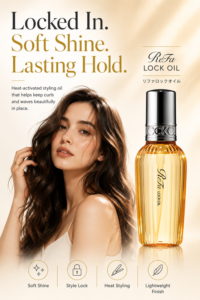
⚡ Quick Verdict
Best for: Thick, wavy, or coarse hair that needs heat protection but has been avoiding oils out of fear of weight. Especially useful if you’re straightening or curling daily in a climate that doesn’t take a season off from humidity.
Skip if: Your hair is fine or already oily near the roots. This is light by hair-oil standards — it’s still an oil, and fine strands may find even a small pump is more than they need.
The core idea: Applied before heat styling, not after. The formula is built around ingredients that respond to a flat iron or curling wand, rather than ones that just sit on the strand and hope for the best.
🧪 Ingredients
Before the table — a small correction. Several sites list Dimethicone and Isopropyl Isostearate as part of this formula. Neither appears on MTG’s actual published ingredient list. It’s a good reminder that “hair oil ingredient breakdown” content gets copied and recopied online until nobody’s checking the original anymore. Here’s what’s actually in the bottle:
| Ingredient | Function |
|---|---|
| γ-Docosalactone | Heat-reactive conditioning ingredient that bonds to damaged areas of hair when a styling tool touches it, per MTG’s own testing |
| Meadowfoam-δ-Lactone | A second heat-reactive conditioning agent, working alongside γ-Docosalactone to tighten the cuticle layer |
| Jojoba Seed Oil | Close in structure to natural scalp sebum, which is a big part of why this doesn’t sit heavily on hair |
| Argan Kernel Oil | Moisture and softness, without the density of heavier single-oil formulas |
| Camellia Seed Oil | A traditional Japanese hair oil ingredient, prized for shine and an easy, lightweight glide on application |
The base underneath these is lighter plant oils — safflower, soybean, flaxseed — instead of the single dense oil that most drugstore formulas lean on. That’s probably doing more of the “light” work than any one hero ingredient gets credit for.
The pairing that actually makes this a different category, though, is γ-Docosalactone and Meadowfoam-δ-Lactone. Most pre-styling products are there to reduce friction — glorified lubricant, essentially. These two are doing something else: reacting to heat itself, moving toward damaged areas of the strand the second a flat iron makes contact. A regular heat protectant spray doesn’t do that. It just tries to survive the heat rather than use it.
💡 Texture & Feel: Does It Actually Feel Light?
Almost every review of this product includes some version of “I didn’t expect it to feel like this” — which tells you something about how low the bar has been set by the rest of the category.
One pump from the bottle is genuinely not much. It’s thin enough to run rather than sit, and warming it between your palms first — the way you’d warm a serum, not squeeze out a lotion — helps it spread through mid-lengths and ends instead of pooling near the crown. That warming step matters more than it sounds like it should.
Application, in practice, looks like this: one pump for shoulder-length hair, warmed between palms for a few seconds, worked through damp or dry hair from mid-length to ends before you pick up a straightener or iron. Roots get skipped entirely unless your hair runs on the drier side.
Where it separates itself from a typical oil is what happens next — the iron itself. Less drag through each section, fewer repeat passes needed to get a piece smooth. That’s not incidental; it’s the same heat-reactive ingredients doing double duty, reducing friction as a side effect of the repair work they’re built for.
The finish isn’t shine in the “I clearly used a product” sense. It’s closer to hair that just stops fighting you — not stiff, not weighed down, still moving when you run your fingers through it hours later. For anyone who’s been burned by a heavier oil before, that’s usually the detail that decides whether the bottle gets a second use.
💧 How It Fits Into Your Routine
The easiest way to get this wrong is treating it like a leave-in conditioner or a daily finishing serum — something you reach for on every wash day, heat tool or not. That’s not really what it’s built for, and used that way, even the lightest formula on the market starts to feel like one product too many.
Where it actually earns its place is narrower and more specific: the days you’re already picking up a straightener or curling iron. If your normal routine is wash, leave-in conditioner, blow-dry, done — no hot tools involved — there’s genuinely nothing here for the oil to react to. Without heat, the ingredients doing the real work just sit there. Expensive shine, basically.
On heat-styling days, the order that seems to work best: normal wash and conditioner first, hair towel-dried or mostly air-dried, then one pump worked through mid-lengths to ends right before the iron comes out. It’s worth skipping any other leave-in oil or serum that same day — stacking two lightweight products tends to cancel out the “light” part of both, however good each one is on its own.
For someone straightening or curling two or three times a week — which describes a lot more people commuting through humid weather than might admit it out loud — that puts the bottle in rotation that often, not daily. At that pace, a 100mL pump bottle tends to last a few months, which changes the cost-per-use math a fair bit from what the shelf price suggests on its own.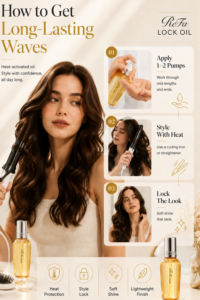
💪 Visible Effects: Does It Survive a Full Humid Day?
MTG’s own published test is a useful anchor point here: hair treated with one pump, curled at 180°C, held its shape measurably better after six hours at 65% humidity than untreated hair under identical conditions. Sixty-five percent is close to a typical afternoon in Singapore or Kuala Lumpur — not a lab number chosen to flatter the product.
That shows up in reviews as two specific, unglamorous wins: styles surviving a full workday without a bathroom-mirror touch-up, and less frizz specifically along the hairline — usually the first place humidity announces itself, whether you’re stepping off an air-conditioned MRT car or out of a taxi into a Kuala Lumpur afternoon.
Nobody describes this as a dramatic before-and-after. The language that comes up again and again is closer to relief — one less thing to think about between the morning mirror and the evening commute.
Used consistently before every heat-styling session, reviewers with color-treated or previously heat-damaged hair describe a slower, cumulative shift: less resistance from the iron, fewer flyaways settling back down after a section is smoothed. That lines up with how the ingredients are designed to work — repair that compounds session over session, not a fix that shows up in one use.
I sent my friend in Singapore the ingredient list and the test numbers before she’d even finished her lunch break. Her reply was shorter than I expected: “so it’s not lying.” Not a rave, not a purchase confirmation — just the relief of a claim actually checking out for once. That’s probably the most honest review this product is going to get.
🗣️ Real Voices from Real Users
“I’ve tried three other ‘lightweight’ hair oils that turned out to be lightweight in name only. This one actually is one. My hair still looks like my hair, just smoother.” — reviewer, age 30, thick/wavy hair, Japanese beauty review platform
“Decent for humidity control, though I’ve learned to use less than the tutorials show — my hair’s on the finer side, and a little goes further than expected.” — reviewer, age 26, fine to medium hair, Japanese beauty review platform
“Color-treated and dry at the ends here. It’s become the step I do before every straightening session, and I’ve noticed less breakage over a few months of using it.” — reviewer, age 34, color-treated hair, Japanese beauty review platform
Satisfaction seems to track pretty closely with hair type. Thicker and coarser hair reports the clearest wins; finer hair tends to circle back to the same note — use less than you think you need.
❓ FAQ
Will this make oily hair worse?
Possibly, near the roots. It’s lighter than most hair oils, but it’s still an oil. Applying from mid-length down rather than at the scalp avoids most of the issue.
Does it hold up in humidity like Singapore’s or Malaysia’s?
MTG’s test was run at 65% humidity, which lines up with a typical afternoon in both places. Reviewer experience in humid climates generally backs up longer style hold compared to skipping a pre-heat product entirely.
Do I actually need a straightener or curling iron for this to work?
Pretty much, yes — the heat-reactive ingredients need heat to activate. Without it, this behaves more like a standard lightweight finishing oil, minus the repair benefit.
Heat protectant spray already does this job, doesn’t it?
Not quite the same job. Most sprays reduce friction and slow moisture loss but don’t contain anything designed to bond to damaged hair on contact with heat. That’s the specific mechanism γ-Docosalactone and Meadowfoam-δ-Lactone are built around.
✨ Where to Buy
🇸🇬 Singapore
Available through LOLO JAPAN on Shopee SG — an authorized Japanese beauty retailer based in Singapore carrying authentic ReFa products.
🇲🇾 Malaysia
Available through LOLO JAPAN on Shopee MY — the same authorized retailer as our Singapore storefront, carrying authentic Japanese products with verified seller ratings.
🌍 International / US
For readers outside Southeast Asia, YesStyle ships authentic Japanese beauty products internationally, including to the US.
🇯🇵 Reference Price
Japanese domestic retail price: approximately ¥2,640. When purchasing ReFa products, verify seller authorization and check for proper packaging including holographic seals and batch codes.
📎 Reference
- ReFa Official Website
- Image © MTG ReFa
コメント